Choosing the right tractor horsepower is important for getting the performance you need without paying for more power than your operation requires. The right horsepower depends on the type of work, implement size, soil conditions, terrain and working area.
A small tractor may be suitable for mowing, transportation and light agricultural work, while heavier tillage and larger implements may require a higher-horsepower tractor.
Instead of choosing a tractor based only on farm size, buyers should consider the complete working requirement.
What Does Tractor Horsepower Mean?
Horsepower is a measurement of the engine’s power output. In agricultural tractors, engine power affects the machine’s ability to perform work and operate different implements.
However, horsepower is only one part of tractor performance.
Other factors such as tractor weight, transmission, traction, PTO output, hydraulic capacity and implement compatibility also affect how effectively a tractor performs a specific task.
This means a higher-horsepower tractor is not automatically the best choice for every farm.
What Determines the Horsepower You Need?
Several factors should be considered when selecting tractor horsepower.
Type of Agricultural Work
Different operations place different demands on the tractor.
Light-duty work such as mowing, spraying and transportation generally requires less power than heavy soil preparation.
Common operations include:
- Mowing
- Tilling
- Plowing
- Cultivation
- Seeding
- Fertilizing
- Spraying
- Transportation
- Trailer operation
Start by identifying the most demanding job the tractor will regularly perform.
Implement Size
The implements you plan to use are one of the most important factors.
A larger rotary tiller, plow or other soil-working implement generally requires more tractor power than a smaller implement.
Before choosing a tractor, check the manufacturer’s recommended horsepower range for the implement.
The tractor should have sufficient power to operate the implement under the expected working conditions.
Soil Conditions
Soil resistance can vary significantly.
Hard or heavy soil can require more power for tillage than loose or relatively easy-to-work soil.
If the tractor will regularly perform heavy soil preparation, choosing sufficient horsepower and traction is particularly important.
Terrain
Flat farmland and sloped or uneven terrain can place different demands on a tractor.
Slopes may require additional traction and careful consideration of tractor weight, wheel configuration and overall stability.
Horsepower should therefore be considered together with drivetrain and traction requirements.
Working Area
Farm size can provide a useful starting point, but it should not be the only factor used to determine horsepower.
A small farm that performs heavy tillage may require more power than a larger property where the tractor is mainly used for mowing and transportation.
The type of work is often more important than the total acreage alone.
General Tractor Horsepower Categories
There is no universal horsepower range for every type of farm, but tractors can generally be considered in several broad categories.
Small and Compact Tractors
Lower-horsepower compact tractors are commonly used for:
- Small farms
- Orchard maintenance
- Greenhouse operations
- Mowing
- Light cultivation
- Transportation
- General property maintenance
Their compact dimensions can also make them useful in areas where maneuverability is important.
Medium-Horsepower Tractors
Medium-horsepower agricultural tractors can provide greater versatility for farms requiring a combination of field work, transportation and implement operation.
They may be suitable for a wider range of agricultural implements and more demanding cultivation tasks.
Higher-Horsepower Tractors
Higher-horsepower tractors are generally intended for heavier agricultural operations and larger implements.
They can be suitable for demanding field preparation, larger working widths and operations where higher working capacity is required.
The appropriate power level should still be matched to the actual implements and operating conditions.
How Much Horsepower Do You Need for Different Applications?
The required horsepower varies depending on the application.
Small Farms
Small farms often prioritize versatility and maneuverability.
A compact tractor with enough power for the farm’s main implements may be more practical than a large tractor with significantly more horsepower than required.
Orchard Farming
Orchard tractors need to balance power with compact dimensions and maneuverability.
The required horsepower depends on the orchard size, terrain, row spacing and implements used for mowing, spraying, cultivation and transportation.
Greenhouse Farming
Greenhouses generally place greater emphasis on tractor dimensions and maneuverability.
A compact tractor with sufficient power for the required implements can be more suitable than a larger high-horsepower machine.
Paddy Field Farming
Paddy fields can involve wet and soft soil conditions that place greater demands on traction.
In these conditions, horsepower should be considered together with drivetrain, tractor weight, tires or tracks and ground pressure.
Dryland Farming
Dryland farming can involve a wide range of operations, including plowing, tilling, cultivation, seeding and transportation.
The required horsepower depends on soil conditions, implement size, working depth and field size.
Horsepower and PTO Power Are Not the Same
When selecting a tractor for PTO-driven implements, do not look only at engine horsepower.
The PTO transfers mechanical power from the tractor to compatible implements such as:
- Rotary tillers
- Mowers
- Sprayers
- Fertilizer spreaders
- Other PTO-driven equipment
The implement should be matched to the tractor’s available PTO power and specifications.
This is particularly important when the tractor will operate larger or power-demanding implements.
Don’t Choose More Horsepower Than You Need
A higher-horsepower tractor can provide greater working capacity, but more power is not always better.
An oversized tractor can mean:
- Higher purchase cost
- Higher operating costs
- Larger physical dimensions
- Greater weight
- More difficult maneuverability in confined areas
For small farms, orchards and greenhouses, choosing a tractor that matches the actual workload can be more practical than simply choosing the highest horsepower available.
Don’t Choose Too Little Horsepower
Choosing a tractor that is too small can also create problems.
Insufficient power may result in:
- Reduced working efficiency
- Difficulty operating larger implements
- Increased engine load
- Reduced working speed
- Limited implement options
If you regularly perform demanding work, it is important to leave enough capacity for the intended applications rather than selecting a tractor that is only suitable for light work.
Horsepower Should Be Considered With Traction
Engine power alone does not determine how effectively a tractor can transfer power to the ground.
Traction depends on factors such as:
- 2WD or 4WD configuration
- Tractor weight
- Tire type
- Ground conditions
- Soil moisture
- Terrain
For example, a high-horsepower tractor operating in soft soil may still experience wheel slip if traction is insufficient.
For more information, see:
2WD vs 4WD Tractors: Which Is Right for You?
A Simple Way to Choose Tractor Horsepower
Before selecting a tractor, identify:
- The heaviest work you will regularly perform
- The largest implement you plan to use
- The required working width
- Your typical soil conditions
- The terrain
- Whether you need 2WD or 4WD
- PTO requirements
- Hydraulic and three-point hitch requirements
Then select a tractor with sufficient power and capacity for the complete working system.
This approach is more reliable than selecting horsepower based only on farm size.
Tractor Horsepower from SD Lander Machinery
SD Lander Machinery supplies agricultural tractors with different horsepower levels and configurations for a range of farming applications.
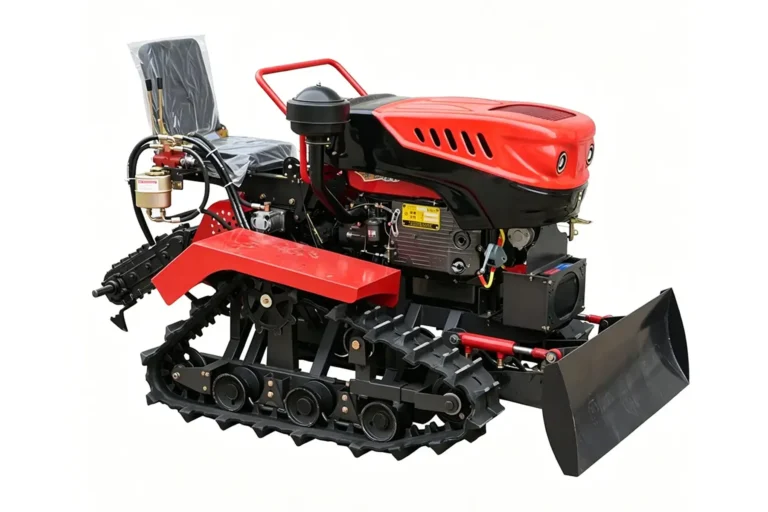
Available tractor configurations can include compact tractors, 2WD tractors, 4WD tractors, wheeled tractors and crawler tractors.
Depending on your application, tractor horsepower can be matched with the required implements, terrain and working conditions.
Contact SD Lander Machinery with your farm size, main applications and implement requirements to discuss a suitable tractor configuration.