Tractors for Paddy Field Farming
Paddy field farming requires agricultural equipment that can operate effectively in wet, soft and sometimes muddy soil conditions. Compared with dryland farming, rice fields can present greater challenges for traction, stability and ground mobility.
Tractors used for paddy field operations should provide sufficient traction and ground performance for tasks such as field preparation, plowing, puddling, tilling and material transportation.
Depending on soil conditions and farming requirements, 4WD wheeled tractors and crawler tractors can be suitable options for paddy field applications.
Paddy Field Tractor Applications
Tractors can support a variety of rice farming operations, including:
- Primary soil preparation
- Plowing
- Rotary tilling
- Puddling
- Field leveling
- Inter-row cultivation
- Weed control
- Fertilizing
- Material transportation
- Trailer towing
- General rice field maintenance
The required tractor configuration depends on soil moisture, field conditions, implement requirements and the type of operation being performed.
Choosing a Tractor for Paddy Field Farming
1. Soil Conditions and Traction
Wet paddy fields can have soft soil and reduced ground bearing capacity. Under these conditions, tractor traction becomes particularly important.
Before selecting a tractor, consider:
- Soil moisture
- Soil firmness
- Mud depth
- Field slope
- Ground bearing conditions
- Required implements
A tractor with suitable traction can reduce wheel or track slip and improve operating efficiency in difficult field conditions.
2. 2WD or 4WD
For paddy field operations, the choice between 2WD and 4WD should be based on actual soil and working conditions.
2WD tractors may be suitable for relatively firm agricultural ground and lighter operations.
4WD tractors provide additional traction and can be more suitable for wet or soft fields, particularly when operating with heavier implements.
For demanding paddy field conditions, 4WD can provide greater versatility.
3. Wheeled or Crawler Tractor
Wheeled and crawler tractors have different characteristics in wet agricultural environments.
Wheeled tractors can provide good mobility and are suitable for a range of farming and transportation operations.
Crawler tractors provide a larger continuous contact area with the ground. This can be advantageous in soft or muddy fields where traction and ground contact are important.
For particularly wet or difficult soil conditions, a crawler tractor may be worth considering.
4. Horsepower and Implement Requirements
The required horsepower depends on the type and size of implements being used.
Lower-horsepower tractors may be suitable for lighter cultivation and transportation tasks, while heavier tillage and larger implements may require greater engine power.
Common implements for paddy field farming include:
- Rotary tillers
- Plows
- Cultivators
- Field levelers
- Fertilizer spreaders
- Weeders
- Trailers
When selecting a tractor, horsepower should be considered together with PTO capability, hydraulic capacity, tractor weight and implement working width.
Suitable Equipment for Paddy Field Farming
4WD Agricultural Tractors
4WD tractors can provide additional traction when operating on soft or wet agricultural ground.
They can be used for cultivation, tillage, transportation and other farming operations when the tractor configuration and implements are properly matched to field conditions.
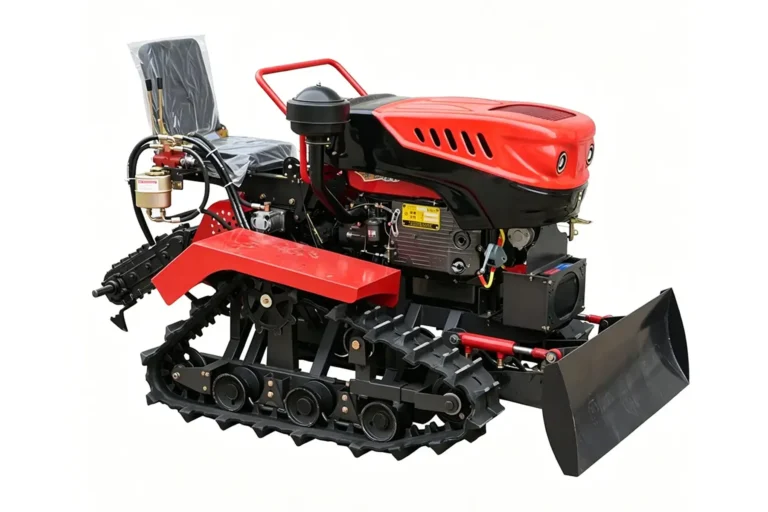
Crawler Tractors
Crawler tractors are particularly useful to consider for difficult ground conditions.
Their continuous tracks provide a larger ground-contact area than conventional tires, which can help improve traction and reduce ground pressure in suitable applications.
Crawler tractors can be used for paddy field preparation, cultivation and other agricultural operations depending on their specifications and configuration.
Compact Agricultural Tractors
Compact tractors can be suitable for smaller rice farms and agricultural operations where maneuverability and lower overall dimensions are important.
The tractor should still provide sufficient traction and power for the required implements and field conditions.
Key Considerations When Selecting a Paddy Field Tractor
Before purchasing a tractor for paddy field farming, customers should consider:
1. Soil moisture
Determine whether the tractor will mainly operate on firm, damp or heavily muddy soil.
2. Ground conditions
Consider mud depth, soil firmness and field bearing capacity.
3. Traction requirements
Evaluate whether 2WD, 4WD or a crawler configuration is more appropriate.
4. Required implements
Identify the tillers, plows, levelers, weeders or trailers that will be used.
5. Horsepower
Match engine power to the size and workload of the implements.
6. PTO and hydraulic capacity
Check whether the tractor can properly operate the required PTO-driven and hydraulic implements.
7. Tractor weight and ground performance
The tractor should provide an appropriate balance between traction, stability and ground pressure.
8. Transportation requirements
If the tractor must frequently move between fields, consider road mobility and transportation requirements in addition to field performance.
Paddy Field Tractors from SD Lander Machinery
SD Lander Machinery provides wheeled and crawler tractors for different agricultural applications and working conditions.
For paddy field farming, customers can select tractor configurations according to:
- Horsepower
- 2WD or 4WD
- Wheeled or crawler configuration
- Tractor weight
- Ground conditions
- Required implements
- Field size
- Soil moisture
Our tractor range can support agricultural applications including field preparation, cultivation, tillage, transportation and general farm operations.
View our tractor products to find a suitable configuration for your paddy field application.