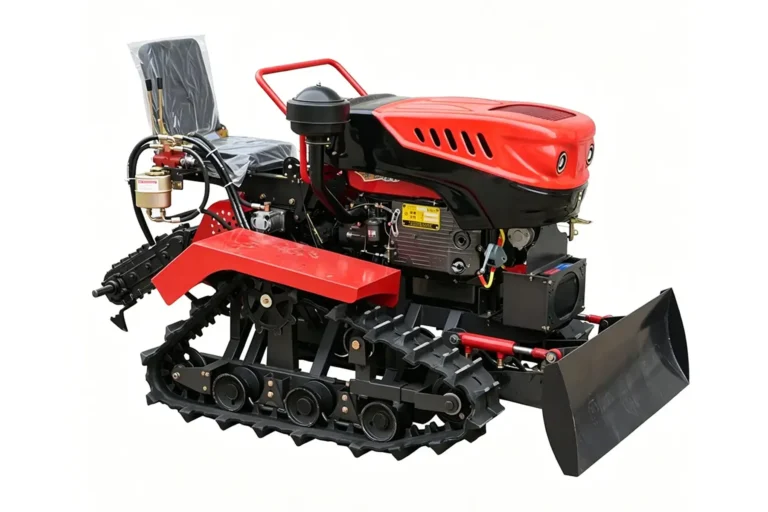
Choosing the right tractor starts with understanding the work the machine needs to perform. Farm size is important, but it is not the only factor. Soil conditions, terrain, required implements, horsepower, drivetrain, tractor dimensions, PTO and hydraulic requirements all affect which tractor is suitable.
A tractor that is too small may not have enough power or traction for the required work. A tractor that is unnecessarily large can increase purchase, operating and maintenance costs.
This guide explains the main factors to consider when selecting an agricultural tractor for your farm.
1. Determine the Type of Farm Work
Start by identifying the jobs the tractor will perform.
Common agricultural tractor applications include:
- Plowing
- Tilling
- Cultivation
- Seeding
- Mowing
- Fertilizing
- Spraying
- Material transportation
- Trailer operation
- General farm maintenance
Different operations require different levels of power, traction and implement compatibility.
For example, a tractor used mainly for mowing and transportation may have different requirements from one used for heavy soil preparation.
2. Consider Your Farm Size
Farm size is an important starting point when choosing a tractor, but the actual working conditions are equally important.
Small Farms
Small farms may benefit from compact tractors that are easy to maneuver and suitable for multiple implements.
Compact tractors can be useful where working areas are limited or where the tractor needs to operate around buildings, trees, fences or other obstacles.
Medium-Sized Farms
Medium-sized farms may require more horsepower and greater implement capacity, particularly when the tractor is used for heavier field operations.
Large Farms
Large agricultural operations generally require tractors with higher horsepower and greater working capacity to efficiently operate larger implements and cover larger areas.
3. Choose the Appropriate Horsepower
Horsepower should be selected according to the work and implements rather than simply choosing the highest available power.
A lower-horsepower tractor may be suitable for:
- Light cultivation
- Mowing
- Fertilizing
- Transportation
- General farm maintenance
Higher horsepower may be required for:
- Heavy plowing
- Deep soil preparation
- Large tillers
- Heavy trailers
- Larger agricultural implements
The tractor should provide enough power for the intended implement while maintaining a practical balance between operating cost and working capacity.
4. 2WD or 4WD: Which Should You Choose?
The choice between 2WD and 4WD depends mainly on soil conditions, terrain and the type of work.
2WD Tractors
2WD tractors can be suitable for relatively firm and level ground and general agricultural or transportation work.
They can be a practical option when high traction is not a major requirement.
4WD Tractors
4WD tractors provide additional traction and can be more suitable for:
- Soft soil
- Uneven terrain
- Slopes
- Heavy implements
- Demanding field conditions
For farms with varied terrain or difficult soil conditions, 4WD can provide greater versatility.
5. Wheeled or Crawler Tractor?
The choice between a wheeled tractor and a crawler tractor depends heavily on the working environment.
Wheeled Tractors
Wheeled tractors are commonly used for general agricultural operations, transportation and work requiring frequent movement between different locations.
They are suitable for many applications on firm agricultural land and can work with a wide range of implements.
Crawler Tractors
Crawler tractors use tracks instead of conventional wheels and can provide strong traction and lower ground pressure.
They can be particularly useful in:
- Wet or soft soil
- Paddy fields
- Sloped terrain
- Certain orchard operations
- Agricultural areas where traction is important
The working environment should be considered before choosing between wheeled and crawler configurations.
6. Check Tractor Dimensions
Horsepower is not the only specification that matters.
The tractor’s overall width, height, length and turning radius can directly affect where it can operate.
This is particularly important for:
- Orchards
- Greenhouses
- Narrow farm roads
- Small farms
- Areas between buildings
- Farms with limited storage space
For narrow working environments, a compact tractor may be more practical than a larger machine with higher horsepower.
7. Check PTO Requirements
The Power Take-Off (PTO) allows the tractor to transfer mechanical power to compatible implements.
If you plan to use rotary tillers, mowers, sprayers or other PTO-driven equipment, check the PTO specifications before purchasing the tractor.
The tractor’s PTO output and operating speed should match the requirements of the intended implements.
8. Check Hydraulic and Three-Point Hitch Requirements
Hydraulic capacity and three-point hitch specifications are also important when selecting a tractor.
Different implements have different lifting and hydraulic requirements.
Before purchasing, check:
- Three-point hitch category
- Maximum lifting capacity
- Hydraulic system specifications
- Hydraulic outlet requirements
- Implement weight
- Implement dimensions
A tractor should be selected as a complete tractor-and-implement system rather than considering the tractor alone.
9. Consider the Type of Implements You Need
One of the most important questions is:
What implements will the tractor operate?
Common tractor implements include:
- Plows
- Rotary tillers
- Cultivators
- Mowers
- Seeders
- Fertilizer spreaders
- Sprayers
- Trailers
- Other three-point hitch implements
If you already have implements, check their power, PTO, hydraulic and hitch requirements before selecting the tractor.
If you are purchasing the tractor and implements together, it is useful to select them as a complete operating system.
10. Consider the Working Environment
The same tractor may not be suitable for every type of farm.
Orchard Farming
Orchards may require compact dimensions and good maneuverability between tree rows.
See our guide to Tractors for Orchard Farming for more information.
Greenhouse Farming
Greenhouse operations may require narrow and relatively compact tractors that can operate within limited spaces.
See our guide to Greenhouse Tractors.
Paddy Field Farming
Wet and soft soil can place greater demands on traction and ground contact.
Crawler tractors and suitable 4WD tractors may be considered depending on the specific field conditions.
See our guide to Tractors for Paddy Field Farming.
Dryland Farming
Dryland farming can involve a wide range of field operations, from soil preparation to cultivation and transportation.
The appropriate tractor depends on field size, soil conditions, implements and required working capacity.
See our guide to Tractors for Dryland Farming.
11. Consider Maintenance and Service
A tractor is a long-term working machine, so maintenance should be considered before purchase.
Check:
- Availability of replacement parts
- Engine and transmission service requirements
- Routine maintenance requirements
- Local service capability
- Technical support
- Warranty terms
- Availability of operating and maintenance documentation
For export purchases, buyers should also confirm spare-parts supply and after-sales support with the supplier.
12. Build a Tractor Specification Checklist
Before contacting a tractor supplier, prepare a basic specification checklist.
Farm Information
- Farm type
- Farm size
- Soil conditions
- Terrain
- Working area dimensions
- Access and storage limitations
Tractor Requirements
- Required horsepower
- 2WD or 4WD
- Wheeled or crawler
- Overall dimensions
- Transmission
- PTO specifications
- Hydraulic capacity
- Three-point hitch specifications
Implement Requirements
- Implement type
- Working width
- Implement weight
- PTO requirements
- Hydraulic requirements
Having this information ready makes it easier to compare different tractor models and configurations.
How to Choose the Right Tractor: Quick Checklist
Before making a final decision, ask these questions:
- What agricultural work will the tractor perform?
- How large is the working area?
- What type of soil and terrain does the tractor need to operate on?
- How much horsepower is actually required?
- Do you need 2WD or 4WD?
- Is a wheeled or crawler tractor more suitable?
- What tractor dimensions can your farm accommodate?
- Which implements will you use?
- Are the PTO and hydraulic specifications compatible?
- Is spare-parts and technical support available?
Agricultural Tractors from SD Lander Machinery
SD Lander Machinery supplies agricultural tractors for different farming environments and operating requirements.
Our tractor range can include compact tractors, 2WD tractors, 4WD tractors, wheeled tractors and crawler tractors for applications such as orchard farming, greenhouse farming, paddy field farming, dryland farming and general agricultural operations.
When selecting a tractor, we recommend considering the complete working requirement—including the farm environment, required horsepower, tractor configuration and implements.
Contact SD Lander Machinery with your farm requirements and implement information to discuss a suitable tractor configuration.