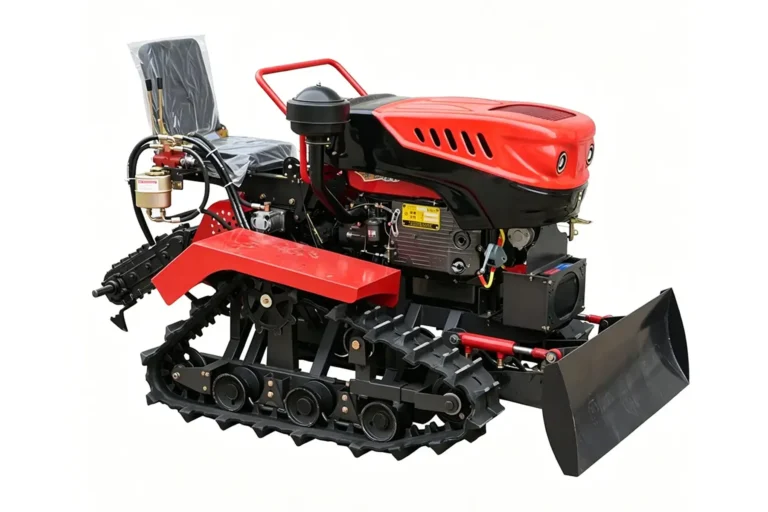
Small farms often operate with limited land, labor and equipment resources. For these operations, improving efficiency does not necessarily mean using larger or more powerful machinery. In many cases, selecting equipment that matches the farm’s size, working conditions and daily tasks can make agricultural operations more efficient.
Agricultural machinery can help reduce manual labor, improve working consistency and allow farmers to complete seasonal tasks within shorter working periods.
Why Efficiency Matters on Small Farms
Small farms may need to handle a wide range of agricultural tasks throughout the year.
Depending on the type of farm, these may include:
- Soil preparation
- Tilling and cultivation
- Planting and seeding
- Mowing
- Fertilizing
- Material transportation
- Crop maintenance
- Land management
Using separate machines for every task can increase equipment costs and maintenance requirements. A versatile tractor with compatible implements can provide a more practical solution for many small-scale farming operations.
The Role of Compact Agricultural Machinery
Compact agricultural machinery can be particularly useful where working space is limited.
Smaller machines can provide better maneuverability in:
- Small fields
- Orchards
- Greenhouses
- Narrow access areas
- Irregularly shaped farmland
- Specialized crop production areas
Machine dimensions can be especially important when working between crop rows or inside confined agricultural areas.
One Tractor, Multiple Applications
One of the main advantages of a tractor-based system is the ability to use different implements for different operations.
Depending on tractor specifications, a machine may work with equipment such as:
- Rotary tillers
- Mowers
- Cultivators
- Trailers
- Fertilizer spreaders
- Other agricultural implements
The tractor provides the power unit while different implements allow the same machine to perform different jobs throughout the farming season.
This flexibility can be particularly valuable for small farms that need to control equipment investment while maintaining multiple agricultural capabilities.
Matching Machinery to Farm Conditions
Efficiency depends on more than machine size.
Farmers should consider the actual working environment before selecting agricultural machinery.
Important factors include:
- Farm size and field layout
- Soil conditions
- Terrain
- Crop type
- Working width
- Available access space
- Required horsepower
- PTO requirements
- Hydraulic and three-point hitch requirements
- Transportation requirements
For example, a tractor suitable for open dryland farming may not be the best choice for a greenhouse or orchard where working space is restricted.
Improving Productivity Through Better Equipment Selection
Agricultural machinery can help farmers complete repetitive operations more consistently and with less manual labor.
Tasks such as mowing, cultivation and material transportation can often be performed more efficiently with properly matched machinery and implements.
However, choosing equipment based only on maximum horsepower or machine size may not produce the best result.
A smaller tractor that matches the implement requirements and working environment may provide a better overall solution than a larger machine that is difficult to maneuver or transport.
Agriculture Is Becoming More Application-Specific
Modern agricultural operations are increasingly diverse.
Small farms may specialize in vegetables, fruit, greenhouse crops, livestock feed or other agricultural products. Each type of operation can have different machinery requirements.
This makes application-specific equipment selection increasingly important.
For example:
Orchard farming may require compact dimensions and good maneuverability between rows.
Greenhouse farming may require narrow machines that can operate in restricted aisles.
Dryland farming may place greater emphasis on field capacity, traction and implement compatibility.
Paddy field farming may require equipment capable of operating in wet and soft soil conditions.
The best machinery solution therefore depends on the actual working environment rather than simply the size of the farm.
Building a Practical Small-Farm Equipment System
For many small farms, a practical equipment system can be built around a versatile agricultural tractor and a selection of implements.
A basic approach is:
Tractor → Implements → Specific Farm Tasks
The tractor should provide sufficient power, PTO capability, hydraulic performance and traction for the selected implements.
As farm requirements change, additional implements can potentially expand the tractor’s range of applications without requiring a completely new machine for every operation.
Conclusion
Agricultural machinery can play an important role in improving the efficiency of small-farm operations.
The most suitable solution is not always the largest tractor or the most powerful machine. Instead, farmers should consider the complete combination of machine size, horsepower, traction, implements and working conditions.
For small farms and specialized agricultural operations, compact and versatile machinery can provide a practical balance between productivity, maneuverability and equipment investment.
SD Lander Machinery provides agricultural tractors and machinery for different farming applications, including small farms, orchards, greenhouses and general agricultural operations.