Small farms often need a tractor that can perform multiple jobs without taking up too much space or becoming difficult to maneuver. A compact tractor can be a practical choice for farms with limited working areas, narrow access routes and a variety of agricultural tasks.
However, compact does not simply mean small. The tractor still needs enough horsepower, traction, lifting capacity and implement compatibility for the work you plan to perform.
This guide explains the main factors to consider when choosing a compact tractor for small farm operations.
What Is a Compact Tractor?
A compact tractor is generally designed to provide agricultural and utility capabilities in a relatively small and maneuverable package.
Compared with larger agricultural tractors, compact tractors can be easier to operate in confined working areas and may be more suitable for smaller farms, orchards, greenhouses and mixed-use agricultural properties.
Typical applications include:
- Soil preparation
- Cultivation
- Mowing
- Fertilizing
- Spraying
- Material transportation
- Trailer operation
- General farm maintenance
Why Choose a Compact Tractor for a Small Farm?
Small farms often have different equipment requirements from large-scale agricultural operations.
A compact tractor can provide several practical advantages.
Maneuverability
Smaller dimensions can make it easier to operate around buildings, trees, fences, farm roads and other obstacles.
Versatility
One compact tractor can operate different implements for multiple agricultural tasks.
Easier Storage
A smaller tractor may require less storage space, which can be important for farms with limited facilities.
Suitable Working Capacity
When correctly matched to the workload and implements, a compact tractor can provide sufficient capability for many small-farm operations.
1. Choose the Right Horsepower
Horsepower should be matched to the work rather than simply choosing the smallest tractor available.
Consider the most demanding task the tractor will regularly perform.
Lower-horsepower compact tractors may be suitable for:
- Mowing
- Light cultivation
- Fertilizing
- Spraying
- Transportation
- General maintenance
Higher horsepower may be required for heavier tillage, larger implements or demanding soil conditions.
For more information, see:
How Much Horsepower Do You Need for a Tractor?
2. Check the Tractor Dimensions
For small farms, tractor dimensions can be just as important as horsepower.
Check:
- Overall width
- Overall height
- Overall length
- Ground clearance
- Turning radius
This is particularly important when the tractor needs to operate between buildings, through narrow entrances or around trees.
A tractor that has sufficient horsepower but cannot easily access the working area may not be a practical choice.
3. Consider 2WD or 4WD
The choice between 2WD and 4WD depends on the farm’s soil and terrain.
2WD
2WD can be suitable for relatively firm and level ground and general agricultural operations.
4WD
4WD can provide additional traction for:
- Soft soil
- Uneven terrain
- Slopes
- Demanding implements
- More challenging working conditions
For small farms with varied terrain, 4WD can provide additional versatility.
See:
2WD vs 4WD Tractors: Which Is Right for You?
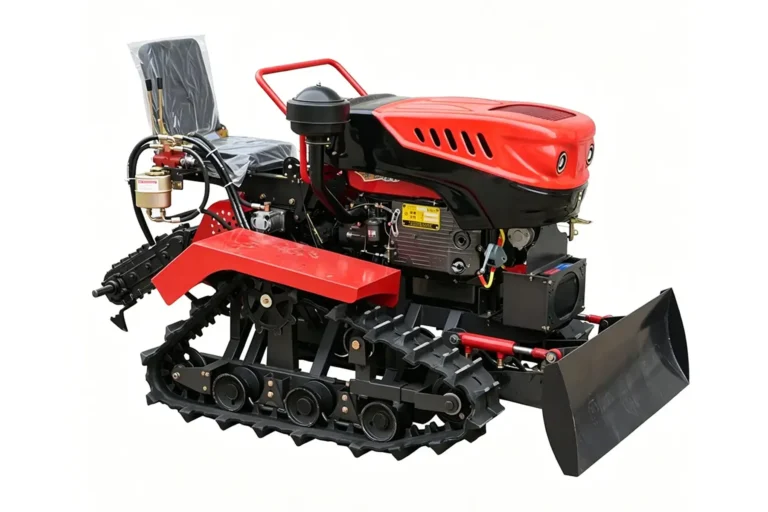
4. Wheeled or Crawler?
Most compact tractors used for general small-farm operations are wheeled tractors, but crawler tractors can be considered for specific working environments.
Wheeled compact tractors can provide good mobility and are suitable for a wide range of agricultural tasks.
Crawler tractors may be more appropriate where soft soil, wet conditions or demanding terrain make traction and ground pressure important.
The choice should be based on the actual working environment rather than tractor size alone.
5. Consider the Implements
A compact tractor becomes much more useful when it can operate the implements required by your farm.
Common implements include:
- Rotary tillers
- Plows
- Cultivators
- Mowers
- Sprayers
- Fertilizer spreaders
- Seeders
- Trailers
Before purchasing, check the required horsepower, PTO, hydraulic capacity and three-point hitch specifications for each implement.
6. Check PTO and Hydraulic Capacity
PTO power is important when using implements such as rotary tillers, mowers and other PTO-driven equipment.
Hydraulic capacity is also important for implements that rely on hydraulic lifting or hydraulic functions.
Check:
- PTO speed
- PTO output
- Three-point hitch category
- Maximum lifting capacity
- Hydraulic flow and pressure
- Hydraulic outlet requirements
The tractor and implements should be compatible as a complete operating system.
7. Consider Your Farm’s Main Applications
The ideal compact tractor can vary depending on the type of farm.
Small General Farm
A compact wheeled tractor with suitable horsepower and multiple implement options can be used for general cultivation, mowing, transportation and maintenance.
Orchard
Orchard operations may require a compact tractor with suitable width and maneuverability for working between tree rows.
Greenhouse
Greenhouses can require particularly compact dimensions because of narrow working areas and limited turning space.
Mixed Agricultural Property
For farms combining crop production, grass maintenance, transportation and general property work, versatility and implement compatibility become especially important.
8. Don’t Choose Based on Size Alone
A common mistake is choosing a tractor simply because it is small.
A tractor that is too small may have:
- Insufficient horsepower
- Limited lifting capacity
- Limited implement compatibility
- Insufficient traction
- Reduced working efficiency
The goal is not to find the smallest tractor possible.
The goal is to find the smallest practical tractor that can reliably perform the required work.
Compact Tractor Selection Checklist
Before purchasing a compact tractor, consider:
- Farm size
- Main agricultural applications
- Soil conditions
- Terrain
- Required horsepower
- 2WD or 4WD
- Wheeled or crawler configuration
- Tractor width and height
- Turning radius
- PTO requirements
- Hydraulic capacity
- Three-point hitch capacity
- Required implements
- Storage and transportation requirements
- Spare parts and technical support
Compact Tractors from SD Lander Machinery
SD Lander Machinery supplies compact and agricultural tractors for different farm sizes and operating conditions.
Our tractor range can include compact 2WD tractors, 4WD wheeled tractors and crawler tractors with different horsepower levels and configurations.
For small farms, the right tractor should be selected according to the actual workload, working environment and required implements.
Contact SD Lander Machinery with your farm requirements and implement information to discuss a suitable compact tractor configuration.